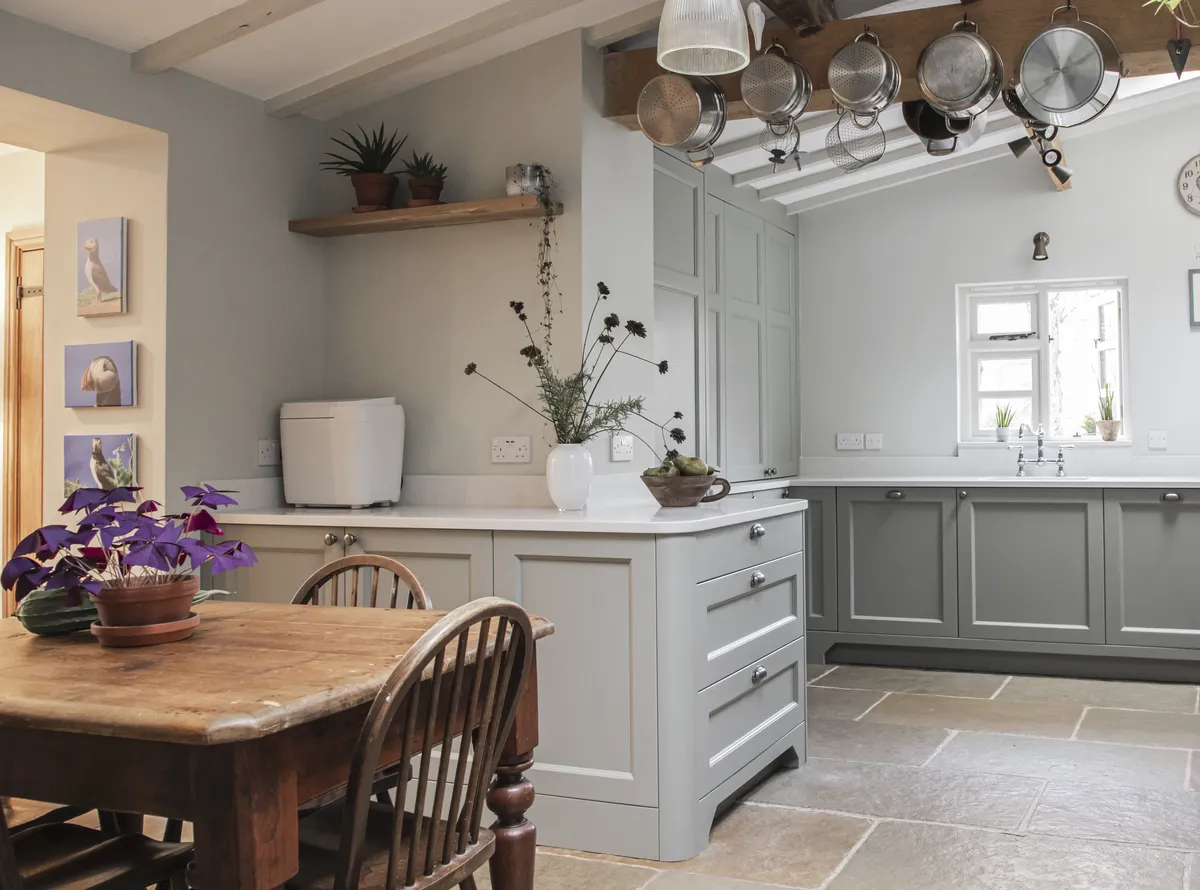
For a long time, kitchen design seemed to be heading in one direction: sleeker, cleaner and increasingly minimal. Everything matched, everything had its place, and anything that looked remotely like real life was carefully hidden away.
But something is changing.
One of the ideas gaining momentum in interiors is the ‘soft kitchen,’ a move away from spaces that feel overtly functional and towards kitchens that have the warmth, personality and comfort we might associate with a living room.
It’s less about following a particular aesthetic and more about changing how a kitchen feels.
Think lamps on worktops, artwork, natural timber, books, textiles and freestanding furniture. A kitchen that feels collected rather than installed; somewhere equally comfortable on a slow Sunday morning as it is during the rush of making dinner.
And, importantly, you don’t need to redesign an entire kitchen to embrace it.
Here are five ways to soften your space.
1. Think furniture, not just cabinetry
One of the easiest ways to make a kitchen feel less ‘kitcheny’ is to introduce pieces that have the character and proportions of furniture.
A freestanding dresser, beautifully made pantry cupboard, glazed cabinet or island designed to resemble a traditional worktable can break up long runs of cabinetry and give a room a much more individual feel.
Bespoke design really comes into its own here. Rather than trying to make a standard-sized unit fit the room, a piece can be designed specifically for its position, responding to the architecture around it.
The result often feels as though it has always belonged there.
2. Layer your lighting
Lighting has an enormous effect on how we experience a room, yet in kitchens we often concentrate almost entirely on practical task lighting.
Of course, you need good illumination over preparation and cooking areas. But think about what happens when the cooking is finished.
A small lamp on a worktop, wall lights, pendants over a table or island, or subtle lighting within glazed cabinetry can create softer pools of light around the room.
Being able to change the atmosphere at the end of the day can transform a kitchen from somewhere you simply cook into somewhere you genuinely want to stay.
3. Bring in things that weren't designed for a kitchen
Not everything in your kitchen needs to have come from a kitchen showroom.
Artwork, books, ceramics, an antique chair, a favourite lamp or a piece picked up on your travels can give a kitchen the layers and personality we naturally create elsewhere in our homes.
It also prevents a newly designed space from feeling too new.
These personal pieces are often what make a beautifully designed kitchen feel like your kitchen rather than simply a beautiful kitchen.
4. Embrace natural materials and texture
Softness doesn't necessarily mean fabric and cushions. Materials can create warmth too.
Natural timber, tactile stone, aged metals, handmade tiles and painted finishes all introduce variation and texture.
We're particularly drawn to materials that don't need to remain pristine. Timber develops character. Metals patinate. Natural stone carries its own individual markings.
Rather than fighting the signs of everyday life, choose materials that can become more beautiful because of them.
A kitchen is, after all, somewhere to be used.
5. Don't make everything match
There was a time when choosing a kitchen often meant choosing one door style, one handle and one colour and repeating them throughout the room.
A softer approach can be much more relaxed.
Painted cabinetry might sit alongside natural timber. An island can contrast with the cupboards around it. A freestanding piece might deliberately feel different again.
The trick is not to make everything the same, but to find a thread that quietly connects it all — perhaps colour, proportion, material or craftsmanship.
Done well, the room feels collected over time rather than purchased all at once.
A kitchen designed around life
Perhaps that's why the idea of the soft kitchen resonates with us at Cymru Kitchens.
For us, good kitchen design has never simply been about cabinetry. It starts with understanding the people who will live in the space and creating something around them.
Because the best kitchens need to do many things.
They need to work beautifully on a busy weekday morning, withstand the realities of family life and make cooking a pleasure. But they should also be somewhere to sit with a coffee, open a bottle of wine with friends or linger around the table long after dinner has finished.
Trends will inevitably come and go.
Creating a kitchen that feels comfortable, characterful and unmistakably yours has rather more staying power.
